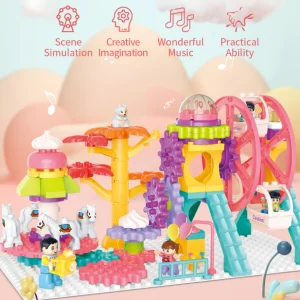
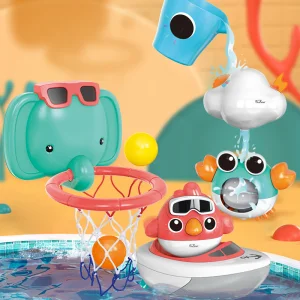
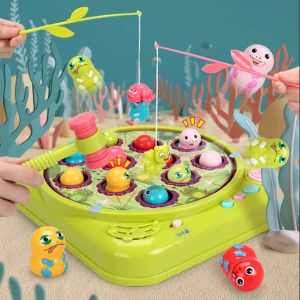
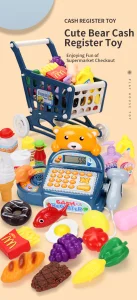
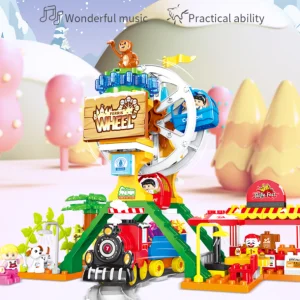
Explore our high-demand export inventory designed for international baby brand catalogs and wholesale buyers.
The global market for wholesale infant play mats and early sensory play environments has experienced a monumental structural shift over the past decade. Driven by rising global birth-care awareness, urbanization, and strict nursery safety standards, the demand for non-toxic, shock-absorbent, and aesthetically adaptable play mats has transitioned from luxury consumer spending to an essential nursery staple. Modern parents and institutional procurement channels—including daycares, early childhood development centers, and healthcare nurseries—demand play products that blend sensory stimulation with rigorous chemical purity.
According to recent industry supply chain metrics, the global market for foam and fabric infant play mats is projected to expand at a compound annual growth rate (CAGR) exceeding 6.8% through 2030. B2B buyers, retail conglomerates, and brand owners seeking to secure market share must evaluate manufacturers not merely on unit cost, but on material compliance, structural density, roll-out scalability, and long-term durability.
Historically dominated by low-density EVA (Ethylene-Vinyl Acetate) foam products, the market has pivoted aggressively toward cross-linked Polyethylene (XPE) and Thermoplastic Polyurethane (TPU) memory foam matrices. This shift is primarily driven by updated regulatory enforcement across the European Union (EN 71-1, 2, 3), North America (ASTM F963-17 / CPSIA), and Asia-Pacific markets. Exporters and factories capable of operating high-precision extrusion machinery and automated lamination lines are now outperforming traditional manual assembly setups, establishing new efficiency baselines for international procurement.
Identifying the leading exporters and manufacturing facilities requires a multi-tier audit process focused on physical safety, chemical stability, and industrial scalability. When benchmarking the world's top 10 infant play mat manufacturers, enterprise procurement teams prioritize five core engineering parameters:
Full compliance with REACH, CPSIA, and EN71 standards. Zero VOC off-gassing, formamide levels below 200 mg/kg, and absence of heavy metals or chlorinated paraffin compounds.
High-density foam core engineering (30kg/m³ to 45kg/m³) providing optimal drop cushioning, preventing cranial impact injuries during early motor development phases.
Solvent-free thermal fusion processes linking non-toxic printed film layers to foam bases without chemical adhesives, preventing delamination after repeated wiping.
In-house mold engineering for seamless textured embossing, custom laser engraving, folding track design, and high-speed multi-color photographic printing.
Selecting the correct substrate material dictates product positioning, price point, safety ratings, and target market acceptance. The table below details the performance characteristics evaluated during factory production runs.
| Material Type | Density Range | Safety / Toxicity Profile | Durability & Wear | Thermal Insulation | Primary Commercial Use |
|---|---|---|---|---|---|
| XPE (Cross-linked PE) | 28 - 35 kg/m³ | Ultra-Safe, Formamide-Free, Odorless | High rebound, scratch-resistant film | Excellent (Cold/Heat barrier) | Foldable / Rollable Nursery Mats |
| TPU Film + Memory Foam | 40 - 55 kg/m³ | Eco-Friendly, Non-Toxic, Bio-based options | Superior tensile strength, long life | Premium High-Comfort cushioning | Luxury Scandinavian Style Play Mats |
| EVA (Ethylene Vinyl) | 35 - 50 kg/m³ | Requires strict formamide monitoring | Moderate; subject to compression set | Moderate Insulation | Budget Interlocking Puzzle Tiles |
| Food-Grade Silicone | 60 - 80 kg/m³ | 100% Inert, Hypoallergenic, Boilable | Extreme durability, tear-proof | Good, high heat resistance | Small Sensory Mats & Teethers |
China remains the undisputed epicenter for wholesale infant play mat manufacturing, exporting to over 150 nations annually. Regions like Shantou, Guangdong and adjacent eastern industrial hubs possess complete ecosystem integration—from raw polyolefin polymer refining and masterbatch compounding to automated high-speed extrusion, precision die-cutting, packaging, and port logistics.
Vertical integration allows Chinese factories to transition from 3D CAD design concepts to physical aluminum foil embossing molds in as few as 10 to 14 business days, slashing time-to-market for international brands.
Mass continuous extrusion lines lower per-square-meter polymer costs while maintaining stringent resin purity. Direct raw material sourcing contracts shield B2B clients from global resin price volatility.
Leading Chinese manufacturers integrate automated optical inspection (AOI) cameras on printing tracks, in-line ultrasonic defect sensors, and lot-by-lot lab testing for formamide, heavy metals, and tensile strength.
Five Star Toys, founded in 1995, stands as a premier example of large-scale, vertically integrated infant toy and playware manufacturing in China. Spanning over 33 years of operational excellence, the organization integrates research, development, design, production, and international commercial distribution under one unified quality management umbrella. Products crafted by Five Star Toys are exported to nearly 100 countries across Europe, the Americas, North Asia, and the Middle East.
"Producing toys like producing food."
By studying the physical, sensory, and intellectual development of 0-6 year old babies at different growth stages, Five Star Toys develops eco-friendly, safe, and multifunctional products that serve as indispensable companions in a child's early developmental journey.
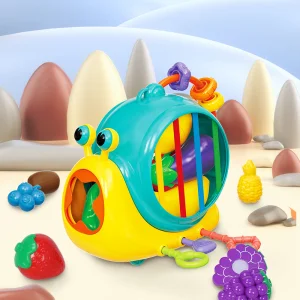
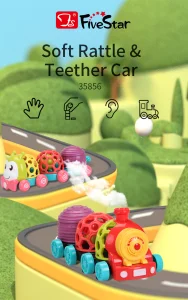
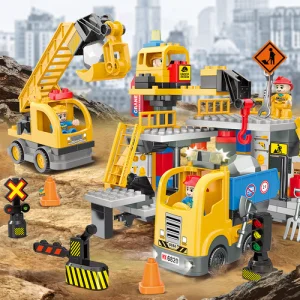
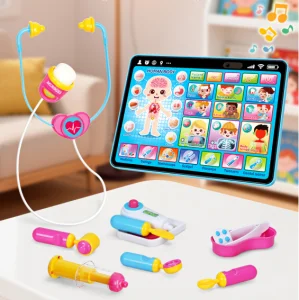
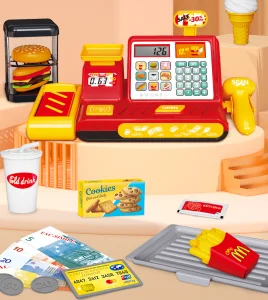
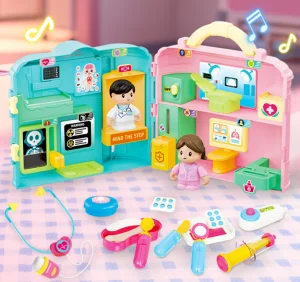
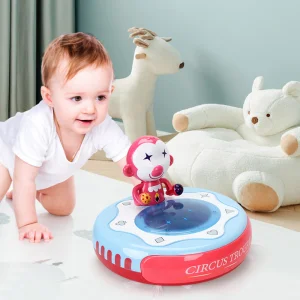
The organization successfully operates four self-owned global brands: "Five Star Toy", "Ballie princess", "Beilexing", and "Duoqile". Product lines span essential rattle series, immersive play houses, interactive cash registers, educational blocks, and baby healthcare products.
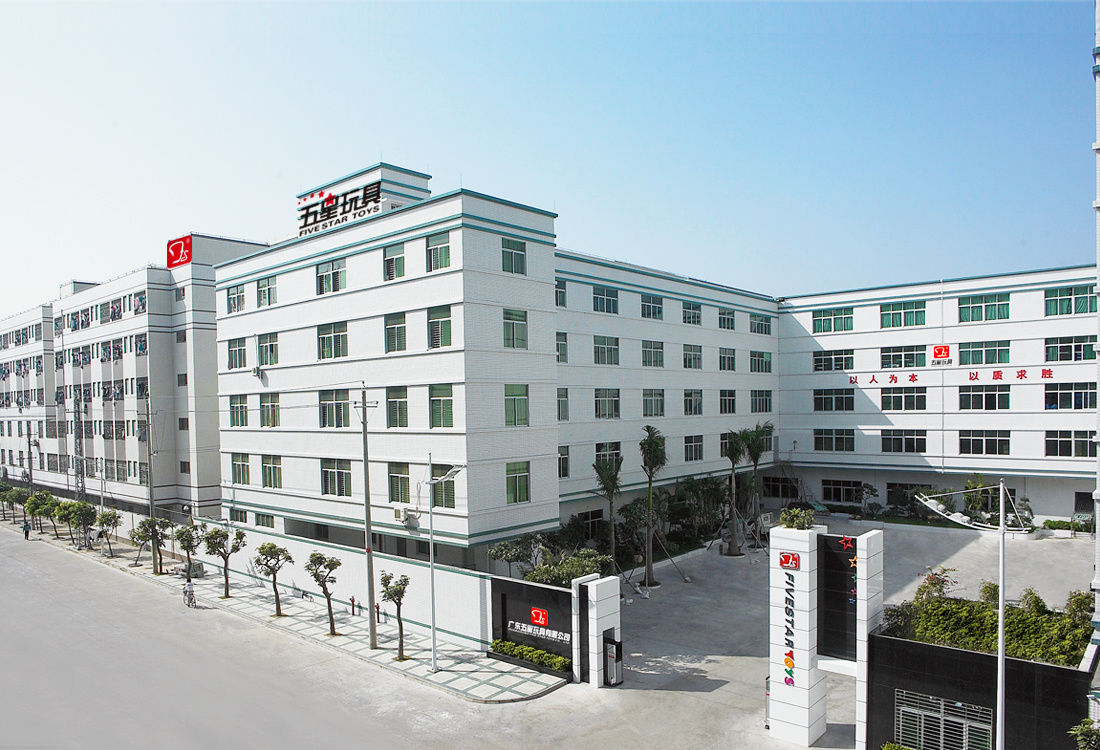

Toys are not mere playthings; they arouse curiosity, explore imagination, and foster physical development. Treating production with food-grade purity standards ensures complete peace of mind for parents and institutional buyers worldwide.

Guided by continuous innovation and teamwork, Five Star Toys prioritizes customer interests above all. Believing that profit is a natural byproduct of creating long-term value for distributors and end-users, the company advocates "Client comes first, and profit comes second."
Global commercial buyers tailor their play mat procurement according to regional demographic trends and specific functional environments. High-performing manufacturing partners design adaptable foam configurations suited for diverse operational scenarios:
Modern parents favor minimalist, neutral pastel color palettes (Scandinavian gray, sage green, oat beige) that seamlessly integrate with high-end living room furniture while offering seamless wipe-clean maintenance.
High-density commercial mats (40kg/m³+) require thick wear layers to withstand heavy foot traffic, sanitize with industrial wipes, and offer modular interlocking boundaries for large group play zones.
Specialized textured play mats feature tactile tactile patterns, raised geometric motifs, and contrasting sensory elements to support motor skill rehabilitation and sensory processing therapy.
Compact, multi-fold XPE mats equipped with waterproof film surfaces and custom canvas carry totes satisfy the growing consumer preference for outdoor family activities and urban park outings.
As the market matures, leading exporters and factories are heavily investing in next-generation material science and smart design technologies to capture competitive advantage:
Transitioning from traditional petroleum-derived polyolefins to sugarcane-based bio-PE and post-consumer recycled foams, aligning with carbon-neutral targets enforced in European markets.
Utilizing advanced rotogravure printing to deliver child-engaging developmental illustrations on Side A (alphabet, roads, animals) and interior-matching architectural patterns on Side B.
Embedding soft, low-voltage conductive fabric touchpoints into high-grade play mats, triggering interactive sound synthesis and educational spoken cues without hard plastic components.
Navigating international procurement requires structured vendor management processes to guarantee product safety, regulatory compliance, and container shipping optimization. Follow this standard four-phase procurement checklist when contracting with wholesale exporters:
Verify ISO9001 quality system certification, BSCI / ICTI ethical labor audits, and third-party laboratory test reports (SGS, Intertek, TÜV Rheinland) generated within the last 12 months.
Conduct pre-production prototype checks for film clarity, edge-binding stitch counts, fold track durability (enduring >10,000 continuous flex cycles), and chemical odor off-gassing testing.
Enforce AQL 1.5/4.0 inspection standards for cosmetic film flaws, color consistency, precise dimensional tolerances (±2mm), and drop-test packaging resilience.
Utilize vacuum-compression packaging or high-density folding techniques to maximize 40ft HQ container loading capacity by up to 35%, significantly reducing unit freight costs.
Expand your enterprise toy inventory with our internationally certified early educational play selections.
 Five Star Toys