Choosing the right Kitchen Toys can turn an ordinary afternoon into a busy little café, a pretend market, or a family cooking game. A wooden spoon becomes a microphone; felt vegetables tumble into a toy colander. Small details matter. The best choices invite children to imagine, sort, serve, and copy familiar routines without making play feel like a lesson. Yet the flashiest set is not always the one a child returns to. Sometimes a simple play kitchen and a few sturdy pieces do more.
Dr. Michael Yogman, a pediatrician and lead author of an American Academy of Pediatrics report on play, wrote, “Play is essential to development because it contributes to the cognitive, physical, social, and emotional well-being of children and youth.” That idea helps explain why pretend cooking can be more than cute imitation: children may practice language, turn-taking, and everyday problem-solving as they play. This guide explores ten Kitchen Toys, from miniature kitchens and cookware to food sets and play appliances. It considers age suitability, durability, ease of cleaning, and the kinds of play each toy encourages. Check small parts and follow the maker’s age guidance, especially for younger children. No toy suits every home. A crowded countertop, limited storage, or a child who prefers real-life helping can change what works. The list is a starting point, not a promise of perfect play.
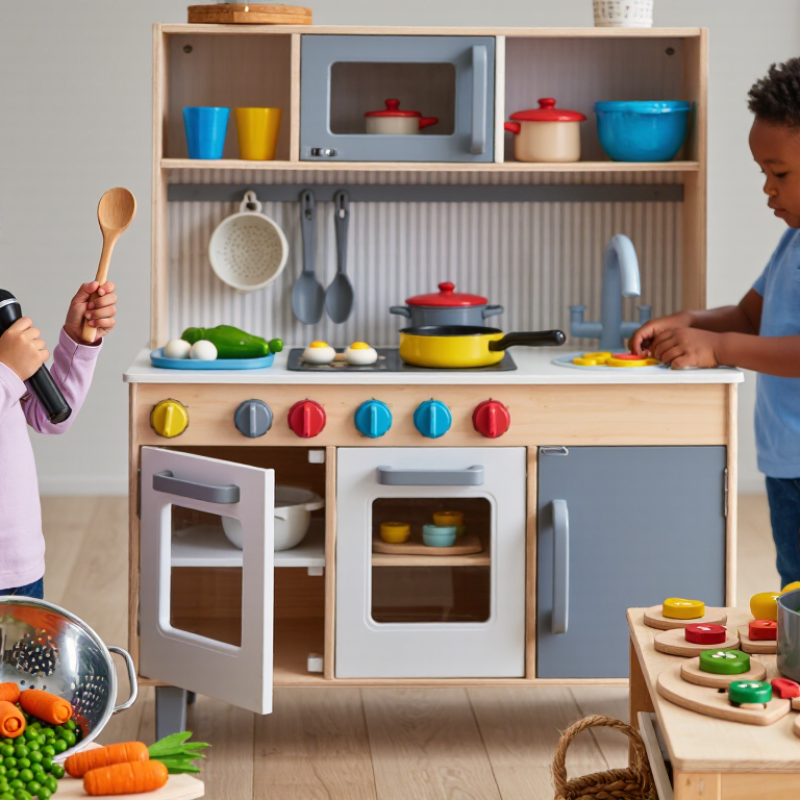
The best kitchen toys turn ordinary play into practical learning. A play kitchen, wooden cutting set, nesting bowls, measuring cups, toy mixer, rolling pin, pretend produce, apron, recipe cards, and child-safe utensils offer varied challenges. Children can sort vegetables by color, count cups, compare sizes, and follow simple steps. These actions strengthen early mathematics, language, memory, and hand control. The learning feels natural because play gives it a purpose.
Kitchen play also develops social and emotional skills. One child may “cook” while another serves the meal. They practice sharing, negotiating, and describing what they made. A pretend recipe can encourage new vocabulary, from “stir” to “crunchy.” Open-ended toys are especially useful because children can change the story. Today, the bowl holds soup. Tomorrow, it becomes a drum. Small details matter.
Safety still needs careful attention. Choose durable materials, smooth edges, and pieces too large to swallow. Adult supervision remains important, even with simple tools. In my observation, children sometimes focus more on a wooden spoon than an expensive-looking set. That can challenge our assumptions. Not every toy produces the same response, and some children may prefer watching before joining. A quiet kitchen game can still show concentration, planning, and growing confidence.
A suitable kitchen toy should make play safer, richer, and easier to supervise. The CPSC’s 2023 report recorded more than 200,000 emergency-department-treated toy injuries among children under 14 in the United States. That figure makes age labels, secure parts, rounded edges, and stable bases essential features. Avoid tiny removable pieces for children under three, especially pretend food, buttons, and miniature utensils. Materials should be washable, non-toxic, and free from sharp seams. A smooth wooden spoon is useful. A brittle plastic knife is not.
Good kitchen toys also support open-ended play. Children can sort pretend vegetables, measure water, stir soft dough, and practice turn-taking. A 2020 clinical report from the American Academy of Pediatrics links play with language, self-regulation, and social development. Look for toys that encourage these skills without requiring one correct answer. Adjustable difficulty helps a toy remain useful as children grow. Storage matters too. Large containers reduce floor clutter and make cleanup part of the activity.
I would not assume realistic details always improve learning. Sometimes fewer features invite more imagination. The toy should fit small hands, but adults must check loose parts regularly. Even a well-designed item can break after repeated washing. Check the manufacturer’s safety testing, age guidance, and material information before purchase. A kitchen toy is most suitable when children can explore independently, while caregivers can still see, clean, and intervene quickly.
The best kitchen toys offer more than bright colors. They invite children to plan, pretend, share, and solve small problems. My top ten are a play kitchen, wooden food pieces, child-safe utensils, a pretend oven, a tea set, a shopping basket, a play sink, simple recipe cards, a washable apron, and a sensory mixing set. Together, these toys create a believable kitchen where a wooden carrot can become soup and a cup can start a family “café.”
Play experiences improve when toys support different kinds of movement. A play sink encourages pouring and cleaning, while tongs build hand control. Recipe cards add gentle structure without controlling every idea. I have noticed that children often ignore complex gadgets and return to a plain bowl and spoon. That surprised me. No toy is perfect, and some sets include pieces that are too small for younger children. Adults should check the recommended age, inspect parts regularly, and choose materials that are easy to clean.
Tips: Keep only a few toys available at once. Rotate them every week. Add real vegetables for naming practice, but supervise closely. Let children make mistakes. A spilled pretend stew can become part of the story. Ask open questions, such as “What does your soup need?” rather than correcting every detail. Durable, simple toys usually create longer play than noisy accessories. They also leave more room for imagination.
Choosing kitchen toys works best when you observe how a child plays, not only their age. For toddlers, chunky pretend food, stacking cups, soft play utensils, and large wooden pots support grasping and simple sorting. Avoid small parts, sharp edges, and loose pieces that could become choking hazards.
At ages three to five, a play kitchen, toy cutting set, mixing bowl, and pretend oven encourage language, role-play, and hand coordination. Choose pieces that open easily and cannot trap small fingers.
Older children may enjoy measuring cups, baking kits, recipe cards, and a pretend café set. These toys introduce counting, sequencing, and customer communication. A child who loves stories might prefer a market stall, while a curious child may enjoy a safe food-science kit with color mixing and texture comparisons. I have noticed that realistic sounds attract attention quickly, but children often return to quiet, open-ended tools. That surprised me.
Check the toy’s age guidance, construction, washable surfaces, and material information. Toys should be sturdy enough for repeated use and simple enough to encourage independent play. Supervise pretend chopping and any activity involving heat, water, or real ingredients. A younger child may need fewer pieces, even when the box suggests more. My own early choices were sometimes too complicated, and the children ignored half the set. Watch, adjust, and let their interests guide the next toy.
When comparing kitchen toys, check the age guidance and inspect every small accessory. Tiny pretend peas, detachable knobs, and miniature utensils can become choking hazards for young children. Small parts matter. Choose pieces too large to fit easily in a child’s mouth, and avoid sets with loose magnets or button batteries. If a toy uses batteries, its compartment should close with a screw-secured cover.
Run your fingers along toy edges and handles. They should feel smooth, without splinters, cracks, or sharp seams. Look for sturdy construction that can withstand being dropped on a kitchen floor. A wobbly toy oven or a pot with a loose handle may frustrate children and create avoidable risks. Check that paint and finishes are described as suitable for children, and follow the maker’s cleaning instructions. Children often put play food in their mouths.
Keep pretend kitchens separate from real appliances. Toys should not heat, cut, or invite children to handle real cookware. That distinction sounds obvious, but busy family kitchens can blur it. I have found that a quick inspection before play catches missing pieces and cracked plastic, though it is easy to forget when cleanup gets rushed. Recheck toys regularly, especially after rough play, and remove anything damaged.
Choose age-appropriate toys with rounded edges, secure parts, and stable bases. Small parts matter.
Look for washable, child-safe materials without sharp seams. A smooth wooden spoon feels better than brittle plastic.
Avoid tiny food pieces, loose magnets, and miniature utensils for children under three. Check every accessory before play.
The battery compartment should close with a screw-secured cover. Keep toys with loose batteries away from children.
Sorting vegetables, measuring water, and stirring soft dough can encourage language and turn-taking. There is no single right answer.
Not always. Fewer details may leave more room for imagination, though children’s preferences differ.
Feel along handles and edges for cracks, splinters, or sharp seams. Recheck after rough play and remove damaged pieces.
Store larger pieces in containers, then make cleanup part of play. It may still get messy.
Kitchen Toys give children an inviting way to imitate everyday routines while exploring creativity, communication, and early practical skills. The best options encourage open-ended play, with features such as realistic details, easy-to-handle pieces, sturdy construction, and enough variety to inspire different stories. This guide introduces ten engaging kitchen play choices, from simple pretend-cooking sets to more complete play experiences, and explains how each can support children’s interests and development.
Choosing the right toy depends on a child’s age, abilities, and preferred style of play. Families can consider whether a child enjoys preparing pretend meals, serving others, or playing collaboratively, then select a suitable level of complexity. Safety matters too: look for age-appropriate pieces, smooth edges, durable materials, and components that are large enough for younger children to handle safely. With thoughtful selection, kitchen play can be fun, imaginative, and suited to a child’s needs.

Five Star Toys