Choosing a pounding toy for a child involves more than bright colors and a satisfying bang. Pounding Toys can support hand strength, coordination, timing, and early problem-solving through repeated, hands-on play. A wooden bench with rounded pegs feels different from a plastic hammer set with softer surfaces. Those details affect comfort, noise, durability, and safety. This guide explores the Top 10 Pounding Toys for Kids in 2026, using practical criteria that parents and caregivers can check at home. We consider age guidance, grip size, material quality, stability, sound levels, and cleanup. Small details matter.
Real play can be messy.
The selections reflect product research, careful comparison, and common observations from family playrooms. A strong toy should withstand enthusiastic tapping without sharp edges, loose parts, or unstable bases. It should also offer enough challenge without frustrating a young child. However, no ranking can predict every child’s experience. Some children may prefer gentle rhythm, while others quickly lose interest. Even the best-designed toy may feel too loud in a small apartment or too easy for an older preschooler. That limitation deserves attention. Parents should inspect toys regularly, follow the maker’s age recommendations, and supervise children who still explore objects with their mouths. The following list aims to make shopping clearer, not perfect, by balancing developmental value, practical use, and everyday reliability.
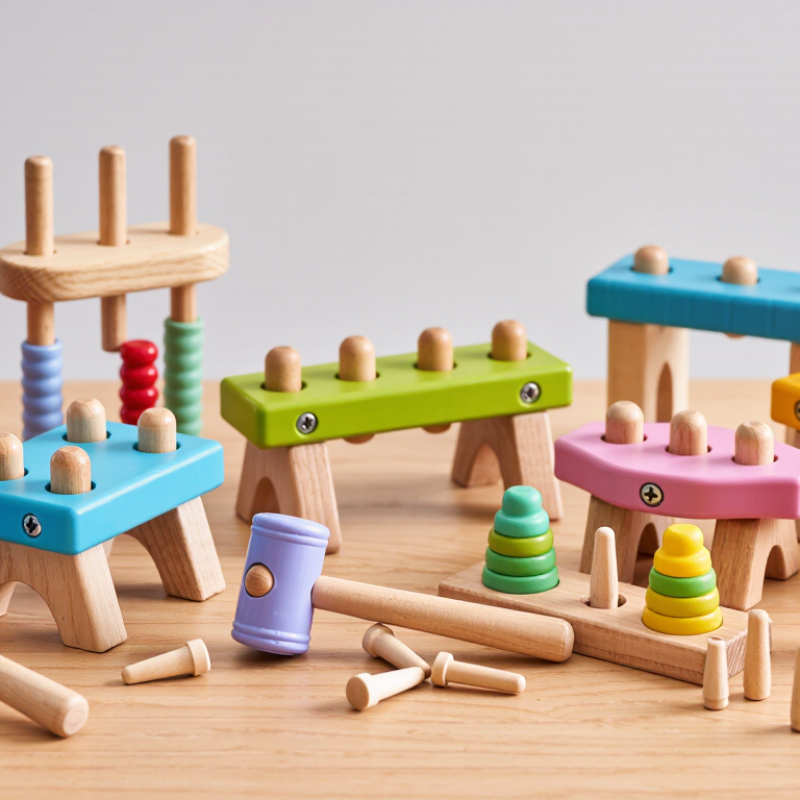
Pounding toys usually include a stable base, removable pegs, and a child-sized mallet. Children tap, push, lift, and repeat. Each strike creates immediate cause-and-effect feedback. The toy also encourages hand-eye coordination, wrist control, grip strength, and two-handed cooperation. One hand steadies the base while the other swings the mallet. Small actions become visible learning.
The CDC’s 2022 Developmental Milestones explain that milestones reflect skills achieved by at least 75% of children at a given age. Pounding play supports several related abilities, including controlled hand movements, object handling, and sustained attention. The World Health Organization’s 2019 guidelines also emphasize active play and reduced sedentary time for young children. A pounding toy cannot replace climbing, drawing, talking, or outdoor movement. It adds another useful experience.
For a 2026 top-ten selection, caregivers should look for broad bases, rounded edges, secure parts, and age guidance. Children need close supervision, especially when mallets or small pegs are involved. The best play may look messy. A child may miss the peg, change hands, or stop after two strikes. That is normal. I would not use the toy as a developmental test. Noise can overwhelm some children, and repetitive hitting may frustrate others. Short sessions, simple encouragement, and breaks often work better than pressure. Evidence supports play, but every child develops differently.
When comparing the top pounding toys for kids in 2026, examine function before decoration. In my experience, a stable wooden or thick plastic base prevents frustrating slips. Small hands need control. Choose a lightweight hammer with rounded edges and a handle that does not feel bulky. Pegs should resist gentle tapping but move with steady pressure. This balance builds hand strength without demanding too much force.
Age guidance matters, but it should not be the only measure. Check the peg size, spacing, and construction for a child’s actual coordination level. Look for securely attached parts, smooth surfaces, and clearly identified materials. A toy with bright colors may attract attention, yet practical details support longer play. I once underestimated noise during testing; repeated pounding became tiring in a small room. Adjustable volume is uncommon, so softer designs can be more useful.
Durability also deserves close attention. Inspect the base after several sessions for cracks, loose joints, or chipped coating. Clear cleaning instructions improve hygiene, especially when several children share the toy. A compact design helps with storage, but very small pieces can disappear quickly. That is a real drawback. Compare developmental value, safety information, sound level, and repairability together. Reliable descriptions should explain what the toy contains, how it works, and which ages can use it appropriately.
This comparison uses common product-selection criteria: the number of poundable targets, available play modes, and an overall developmental-value score. Higher scores indicate stronger support for hand-eye coordination, fine-motor practice, cause-and-effect learning, and repeat play. Always match the toy with the child’s recommended age and supervise play with hammers, pegs, or small parts.
Pounding toys are not one category. They include peg benches, hammer-and-ball sets, tap-tap construction boards, and small rhythm instruments. Each type serves a different purpose. Peg benches build hand strength and bilateral coordination. Hammer-and-ball designs add cause-and-effect learning. Tap-tap boards support early planning, while rhythm toys encourage timing and listening.
Age fit matters. For toddlers, choose large, firmly attached parts and a lightweight hammer. Preschool children can manage removable pegs, simple patterns, and thicker construction pieces under supervision. The U.S. Consumer Product Safety Commission’s Age Determination Guidelines stress developmental ability, not age labels alone. That distinction is useful. A careful adult should check grip, noise, edges, and loose components before play.
Market data also explains the category’s staying power. Circana reported global toy sales of about 104.2 billion dollars in 2023, despite a seven percent decline. Durable, repeat-use toys may offer stronger value than novelty items. Still, pounding toys are not automatically educational. A child may only hit randomly. In supervised play sessions, adults can name colors, count strikes, or model gentle tapping. This extends the toy’s use without controlling every move. Noise remains a weakness. A soft floor mat helps, but it does not eliminate sound. Inspect wooden surfaces regularly, especially after drops or rough indoor play.
Top 10 Pounding Toys for Kids in 2026
Age labels are useful, but imperfect. Children develop grip strength and coordination at different speeds. A wooden peg bench suits ages 18 months and up, using smooth hardwood and large pegs for beginner pounding. A soft-mallet bench adds silicone parts and reduces noise. It supports grasp control, but still needs close supervision. A ball-pounding tower fits ages 2 and up, helping children track movement and cause-and-effect. Choose oversized balls that cannot enter a choking-test tube.
For ages 2 to 3 For ages 2 to 3, a shape-pounding board can build hand-eye coordination through chunky wooden pieces. A cork-block pounder offers gentler resistance and helps children control force. For ages 3 and up, a peg mosaic hammer set encourages pattern-making with wood or thick, securely attached plastic pegs.
Animal rescue pounding box An animal rescue pounding box adds simple sequencing skills, although some designs may frustrate younger children. Watch the child, not only the package.
Older preschoolers Older preschoolers may enjoy a number pounding board, which links counting with controlled wrist movement. An adjustable-resistance bench introduces planning and problem-solving for ages 4 and up. A lightweight foam-and-wood mallet set supports safe practice, but foam can tear after repeated use.
Safety inspection Inspect every toy for splinters, loose caps, cracked handles, and trapped fingers. Avoid small removable parts for children under three. Some safety advice sounds obvious. It is still easy to miss during busy play.
Selecting a pounding toy starts with the child’s age, grip, and coordination. Choose a sturdy model with rounded edges, smooth surfaces, and securely fitted pieces. Follow the stated age range and inspect every peg, handle, and joint before play. Small parts matter. Avoid toys with loose paint, sharp corners, strong odors, or easily detached components. A toy should feel stable on a low table or clean floor.
Use the toy while an adult stays nearby, especially with younger children. Show the child how to tap toward the pegs, not toward people, pets, or glass. Keep fingers away from the striking area. Eye protection is sensible during energetic play, although many families overlook it. Stop play if a handle cracks or a part begins to wobble. Child-safety guidance favors short, supervised sessions over crowded play spaces.
Clean the toy with a soft cloth, mild soap, and a small amount of water. Do not soak wooden parts, because trapped moisture can cause swelling or mold. Dry it completely. Disinfecting chemicals may damage finishes and leave residues, so check the care instructions first. Store the toy in a dry, shaded container, away from heaters and damp bathrooms. I would recheck it before each use; cleaning can hide small cracks, and tidy storage does not guarantee safety.
It usually has a stable base, removable pegs, and a child-sized mallet. Children tap, push, lift, and repeat. Each strike shows cause and effect.
It can strengthen grip, wrist control, hand-eye coordination, and two-handed cooperation. One hand steadies the base. The other hand uses the mallet. It also encourages short periods of focused attention.
No. It adds one useful experience. Children still need climbing, drawing, talking, movement, and varied play.
Look for a broad, stable base and rounded edges. Choose a lightweight mallet with a comfortable handle. Pegs should move under steady pressure, not fall out easily. Bright colors matter less than safe construction.
Check the stated age guidance, peg size, spacing, and construction. Consider the child’s grip and coordination. Age labels help, but they are not the whole decision. I may underestimate a child’s needs without observing actual play.
Stay nearby, especially with younger children. Show the child how to tap toward the pegs. Keep fingers away from the striking area. Stop play if a handle cracks or a part wobbles. Short sessions work better than pressure.
Noise may overwhelm some children, especially in a small room. Repeated hitting can also cause frustration. A child may miss the peg, switch hands, or stop quickly. That is normal, not a developmental test result.
Wipe it with a soft cloth, mild soap, and little water. Do not soak wooden parts. Dry everything completely. Store it in a dry, shaded container. Recheck pegs, joints, coating, and handles before each use. Tidy storage does not guarantee safety.
Pounding Toys are hands-on learning tools that help young children build coordination, focus, hand strength, and early problem-solving skills through safe, repetitive play. This guide explains how these toys support early childhood development and compares important features such as construction, durability, noise level, size, design, and ease of use. It presents ten types of Pounding Toys for 2026, including models suited for tapping, stacking, releasing, matching, and simple cause-and-effect exploration.
Each toy is discussed according to appropriate age, safety considerations, materials, and skill level, helping caregivers choose an option that matches a child’s development. The guide also offers practical advice for introducing the toy, supervising play, checking for loose or damaged parts, cleaning surfaces with child-safe methods, and storing each item securely. By considering comfort, accessibility, and play value, families can select a durable pounding toy that encourages independent learning while maintaining a safe and enjoyable play environment.

Five Star Toys