Learning Toys can turn ordinary moments into chances to explore, practice, and ask questions. The best choice is not always the newest or most expensive one. It should fit a child’s age, interests, abilities, and preferred way of playing. A set of blocks might invite a toddler to stack, topple, and try again. A simple puzzle can help an older child notice shapes and patterns while practicing patience. That matters.
When comparing options, look for clear age guidance, sturdy construction, and instructions caregivers can understand. Check for small pieces when young children are nearby, and consider whether parts are easy to clean and store. Think about the skills you hope to encourage, but leave room for imagination. A toy with several possible uses may stay interesting longer than one with a single task. Children vary.
Observe how the child responds over several play sessions. Do they return to the toy, invent new games, or ask for help? One that sits untouched may be a poor fit, even if reviews praise it. No product can guarantee learning; conversation, free play, and adult attention also shape the experience. Choosing well takes patience, and sometimes a rethink. This guide explores what to look for, how to compare different types, and how to balance learning value with safety, enjoyment, and budget. The goal is not a perfect purchase. It is a thoughtful choice that gives a child room to play, discover, and grow.
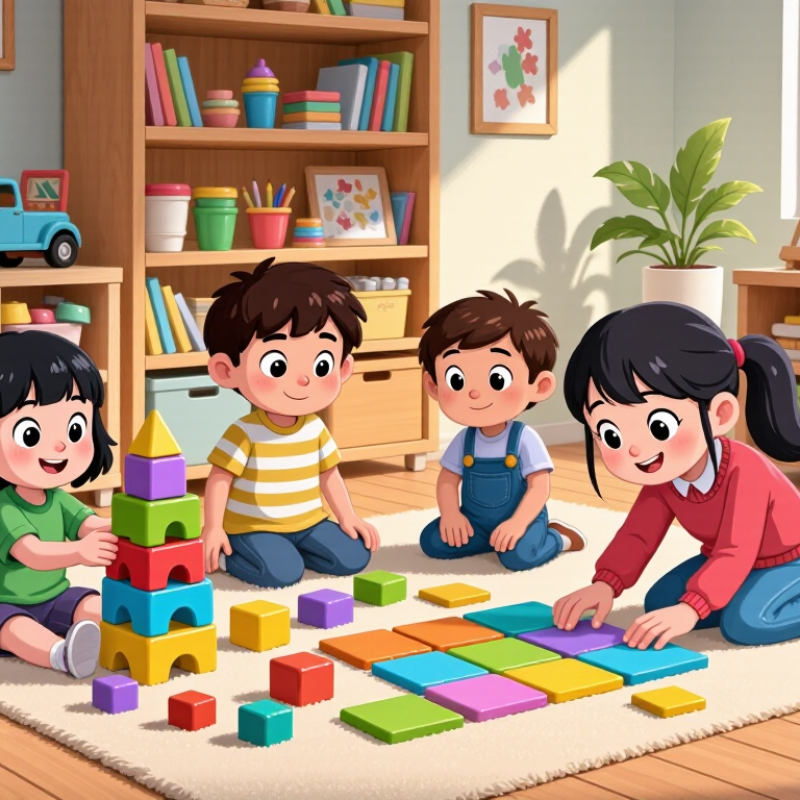
Assess the Child’s Age, Developmental Stage, and Interests
Age labels are useful starting points, not a full assessment of a child’s abilities. A four-year-old who enjoys sorting may spend longer with shape puzzles than with toys intended for older children. Check whether the child can handle the pieces, follow the basic play steps, and stay interested without constant adult help. Small parts may be unsuitable for young children, so follow age guidance and supervise when needed. Development varies. One child may speak confidently but still need help with turn-taking or fine motor control.
Choose toys that match what the child is practicing now, with room for a gentle challenge. Blocks can invite counting, balancing, and storytelling; chunky crayons support grip and free drawing. If a child loves animals, animal figures may inspire sorting or pretend play, but every toy need not teach everything. Watch what happens after a few minutes: does the child invent a new use, repeat an action, or walk away? These clues can guide your next choice. I still misjudge. A toy that looks educational to an adult may feel like work to a child. Offer two suitable options and notice which one they return to tomorrow.
How to Choose Learning Toys for Kids
Start with the child’s age, then match the toy to their current skills and interests.
These broad age bands are a starting point, not developmental deadlines. Choose toys that suit the child’s abilities and interests, check the age and safety guidance on the toy, and offer room to explore.
Identify the Skills and Learning Goals the Toy Should Support
Before choosing a toy, name the skill you want it to invite: grasping, sorting, storytelling, or taking turns. A toy cannot guarantee a developmental result; it can create a useful chance to practise. The CDC’s developmental milestones note that many four-year-olds can name a few colors, while many five-year-olds can count to 10. Use milestones as conversation starters, not a scorecard. For color practice, offer chunky blocks and ask your child to sort them. For early counting, count toy animals as they go into a small box.
Match the challenge to your child’s current ability. A puzzle with a few large pieces may support problem-solving without creating needless frustration. A pretend kitchen can prompt new words and shared stories. In a small study of 26 parent-infant pairs, researchers found fewer adult words and conversational turns during play with electronic toys than with books or traditional toys (Sosa, JAMA Pediatrics, 2016). The sample was limited, so it does not settle every question about electronic play. Still, it highlights the value of toys that leave room for back-and-forth interaction. Simple works.
Watch what your child actually does, not just what the package promises. If a stacking toy is repeatedly knocked down, that may be exploration—not failure. I can still mistake quiet play for learning, or busy play for progress. Notice what holds attention, then adjust the goal or toy as skills change.
Check Safety Standards, Materials, and Age-Appropriate Design
Choosing a learning toy begins with safety, not promises about intelligence. The U.S. Consumer Product Safety Commission’s 2023 Toy-Related Deaths and Injuries report estimated 231,700 toy-related emergency-department injuries that year. That figure makes small parts, loose seams, and brittle plastic worth checking closely. For younger children, avoid pieces that fit entirely inside a small-parts test cylinder. Look for clear age guidance and evidence that the toy meets applicable safety standards, such as ASTM F963. Labels help, but they cannot assess your child’s individual habits.
Materials deserve a hands-on inspection. Feel for sharp edges, sniff for strong chemical odors, and check whether paint flakes or fabric sheds. These checks are not laboratory tests; I would not treat “non-toxic” wording alone as proof of quality. Age-appropriate design matters just as much. A toddler may benefit from chunky blocks that are easy to grip, while an older child may enjoy puzzles with graduated difficulty. If the toy has cords, magnets, or batteries, read the warnings and keep parts secured as directed. Small details matter. Watch how your child actually uses it, too: a toy marked for an age group can still frustrate one child and bore another. That judgment is imperfect, and worth revisiting.
Compare Play Value, Durability, and Room for Growing Skills
Play value is more than how long a toy keeps a child busy. Notice what your child does with it: Does a set of wooden blocks become a bridge, a tower, and then a pretend shop? Toys with open-ended uses invite children to make choices and return with new ideas. Watch closely. A toy that looks educational on the box may offer little room for play once its one puzzle is solved.
Durability matters in everyday moments: pieces dropped on a kitchen floor, pages turned with sticky fingers, or a handle pulled during excited play. Check seams, hinges, and small parts, and follow the maker’s age guidance. No toy lasts forever, and a scuffed surface is not automatically a problem. What matters is whether it stays safe and usable.
Room for growing skills can be harder to judge. Look for adjustable challenges, such as blocks that support simple stacking now and detailed building later, or a game with easier and harder ways to play. A toy need not teach everything.
Sometimes, I’ve overvalued clever features and overlooked whether a child actually wanted to play with them. Keep that possibility in mind.
Choose a Toy That Fits Your Budget and Home Environment
A good learning toy should fit your budget before it fits your wish list. Set a spending limit, then account for batteries, replacement pieces, and storage. A simple wooden puzzle or set of washable blocks can invite sorting, counting, and storytelling without a large price tag. More pieces do not always mean more learning. Check the recommended age and inspect small parts if younger children share the space.
Look closely at your home environment. Measure the play area, including the space needed to open drawers or walk past a table. In a small apartment, nesting cups or a foldable activity mat may be easier to manage than a large play kitchen. A toy that stores in one basket is more likely to stay accessible. Consider noise, too; a toy with repeated sounds can feel very different in a quiet home.
It is easy to underestimate cleanup. A toy with dozens of tiny pieces might seem engaging in the shop, then scatter across the living-room floor each evening. That does not make it a bad choice, but it may need a dedicated tray or a place out of reach. Choose materials you can clean with ordinary household supplies, and check that parts feel sturdy. Leave room for changing interests: a modest toy that can be used in several ways may earn its place longer than a costly item with one fixed purpose.
How to Choose the Best Learning Toys for Kids – Choose a Toy That Fits Your Budget and Home Environment
| Toy Type |
Typical Price Range (USD) |
Learning Benefits |
Space and Storage Needs |
Noise and Cleanup |
Best Fit |
| Stacking and building blocks |
$10–$40 |
Supports spatial reasoning, creativity, and fine motor skills. |
Low to moderate; stores neatly in a lidded bin. |
Usually quiet; pieces need gathering after play. |
Families seeking an open-ended toy for a small or shared play area. |
| Puzzles and matching games |
$5–$25 |
Encourages problem-solving, visual recognition, and patience. |
Low; most sets fit on a shelf or in a drawer. |
Quiet; pieces can be misplaced, so a storage pouch or box helps. |
Budget-conscious homes and calm, table-based play. |
| Art and craft supplies |
$8–$35 |
Builds creativity, hand control, and confidence expressing ideas. |
Low to moderate; needs a work surface and organized supply storage. |
Quiet; cleanup varies by materials. Washable supplies can simplify tidying. |
Homes with a wipeable table or a designated craft area. |
| Pretend-play sets |
$15–$60 |
Promotes language, social interaction, and imaginative thinking. |
Moderate; small accessories benefit from a dedicated container. |
Generally quiet, though play can spread across a room; regular sorting helps. |
Homes with some flexible floor or play space. |
| Musical instruments and sound toys |
$10–$45 |
Introduces rhythm, listening, coordination, and cause and effect. |
Low to moderate; storage depends on the instrument’s shape. |
Can be noisy; consider volume, play times, and neighbors. |
Homes where lively sound is acceptable or play can happen at set times. |
| Ride-on and large movement toys |
$25–$100+ |
Encourages gross motor skills, balance, and active play. |
High; requires clear floor space and somewhere to park it. |
Usually moderate noise; may need outdoor space or a clear indoor route. |
Homes with suitable open space and safe surfaces for movement. |
|
Selection tip: Price ranges are approximate and vary by materials, size, and location. Check the toy’s age guidance, small-parts warnings, and storage requirements before buying.
|
Conclusion
Choosing the best Learning Toys begins with understanding the child who will use them. Consider their age, developmental stage, interests, and current abilities so the toy feels engaging without being too easy or frustratingly difficult. Think about the skills you hope to encourage, such as problem-solving, creativity, communication, coordination, or early number and language skills. A good choice can make learning feel like an enjoyable part of play rather than a formal task.
Before buying, check that the toy is made from suitable materials, has a safe, age-appropriate design, and is easy to use. Compare how much play value it offers, how well it is likely to hold up over time, and whether it can remain interesting as the child develops new abilities. Finally, choose an option that fits your budget and available space at home. The best toy is one that suits the child, supports meaningful learning, and works well for your family.

 Five Star Toys