How to Choose Pretend Play Toys for Wholesale?

Time:2026-09-20 Author:Charlotte
0%

Choosing Pretend Play Toys for wholesale is not simply a matter of selecting colorful products. Buyers must assess play value, safety, durability, and commercial practicality. A miniature kitchen may look attractive online, yet weak hinges, thin plastic, or tiny detachable parts can create returns and customer complaints. Product testing documents, clear age guidance, and reliable factory communication should guide every purchasing decision.

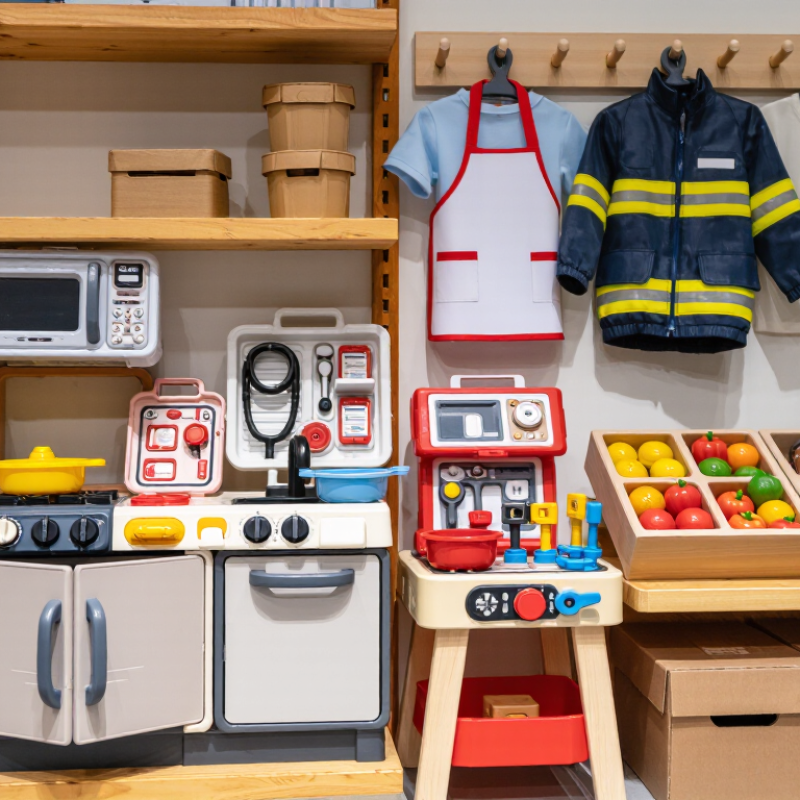
Amanda Gummer, a respected child development and play expert, offers a useful principle: “The best toys are those that encourage children to use their imagination.” This idea matters greatly when evaluating Pretend Play Toys. Open-ended sets, such as doctor kits, grocery counters, tool benches, and role-play costumes, can support storytelling beyond one fixed scenario. Children should be able to combine pieces, invent characters, and change the play sequence. That flexibility often increases perceived value.

Wholesale buyers also need to inspect the details that photographs hide. Check stitching, surface finishes, storage size, replacement parts, and packaging strength. Compare landed cost with expected retail pricing, not only the factory quotation. A low unit price can become expensive after damaged cartons or slow-moving stock. I have seen attractive sets fail because their colors suited one market but not another. That mistake is easy to repeat.

The best choice is rarely perfect. It balances educational value, safety evidence, shelf appeal, and dependable supply. A small trial order may reveal more than a confident forecast. Review customer feedback, observe children using the products, and adjust the next purchase with humility.
How to Choose Pretend Play Toys for Wholesale?

Define Pretend-Play Categories by Age, Skill, and Circana Demand Data

How to Choose Pretend Play Toys for Wholesale?

Age, skill, and demand data should guide every pretend-play buying decision. Circana’s 2024 U.S. toy industry review reported approximately $28.6 billion in sales, with the market nearly stable after a weaker 2023. That stability does not make every category safe. Wholesale buyers should compare pretend-play demand with children’s developing abilities.

For ages three to four, choose large, durable pieces that support naming, sorting, and simple role imitation. Toy kitchens, doctor sets, and market counters can work well here. Avoid tiny accessories when possible.

For ages five to seven, select sets that encourage sequencing, negotiation, and early problem-solving. Menus, cash tokens, uniforms, and reusable containers add realistic detail. Older children often need open-ended scenarios, not louder features.

Circana tracking can reveal seasonal movement, price sensitivity, and category momentum, but it should not replace local evidence. Check sell-through by age band, return reasons, and repeat orders before expanding a line. The Toy Association’s 2024 trend reporting also identified creativity, social play, and screen-free engagement as continuing purchase drivers. These signals support role-play products with shared tasks and flexible parts.

A tidy age chart can still mislead. Children develop unevenly. Some three-year-olds manage complex stories, while some seven-year-olds prefer simpler play. Wholesale assortments should therefore include different skill levels, clear age guidance, and accessible packaging.

I would test smaller quantities first. Demand forecasts are useful, but shelf behavior is more honest.

Quantify Demand with Circana’s 2023 U.S. Toy Sales: $28.6 Billion

Circana reported $28.6 billion in U.S. toy sales during 2023. This figure signals a large, active market, but it does not guarantee equal demand across every toy type. Wholesale buyers should study pretend play as a specific use case. Children often choose kitchen sets, doctor kits, dress-up accessories, and construction role-play items. These products support storytelling, imitation, and social interaction.

Measure demand before placing a large order. Review past sales by age range, season, price point, and play theme. A small test shipment can reveal whether buyers prefer compact kits or larger sets. Watch practical details, too. Can the pieces fit inside a 40-centimeter storage box? Are the hinges firm? Does the packaging show every included accessory clearly? These details affect returns and shelf appeal.

Durability deserves careful attention. Pretend play toys may face repeated handling, dropped pieces, and shared classroom use. Choose smooth edges, secure connections, readable instructions, and age-appropriate components. Avoid claims that lack testing evidence. A low unit cost can mislead when missing pieces create customer complaints. I have seen attractive sets move slowly because the accessories felt repetitive. That lesson is easy to overlook. Wholesale planning should balance Circana’s broad market signal with local evidence, realistic margins, and frequent reorder data. Demand may grow, but assumptions still need checking.

Set Safety Gates with CPSC’s 1.25-Inch Test and ASTM F963-23

When choosing pretend play toys for wholesale, safety gates should guide every purchase decision. A colorful kitchen set still needs measurable protection.

Use the CPSC’s 1.25-inch small-parts test as an early screening tool. A part that fits completely inside the test cylinder may present a choking risk. Check knobs, beads, pretend food pieces, fasteners, and removable accessories separately. Do not rely on packaging photos or a quick visual inspection. Small components can loosen after repeated twisting, dropping, or washing.

ASTM F963-23 provides broader toy safety requirements, including mechanical, physical, material, and labeling considerations. Ask suppliers for recent test reports that match the exact toy design, age grade, and production materials. Confirm that the report covers the finished product, not only a similar sample. I have seen buyers overlook accessory packs during review. That is an expensive weakness.

Keep samples from each production batch when possible. Inspect seams, hinges, magnets, and painted surfaces by hand. A supplier’s certificate helps, but it does not replace independent verification. Requirements can vary by product type and market, so qualified testing support remains important. Safety decisions should be documented before accepting large quantities.

Verify Materials Under EN 71, CPSIA, and REACH Compliance Limits

When sourcing pretend play toys wholesale, material verification should begin before price negotiation. A bright toy can hide unsuitable plastic, paint, glue, or fabric treatments. Ask suppliers for a complete material list, not a broad statement such as “safe materials.” Check whether each component matches relevant EN 71, CPSIA, and REACH limits. Small parts matter too.

For EN 71, review testing for mechanical and physical properties, flammability, and migration of certain elements. CPSIA checks can involve lead, phthalates, tracking labels, and third-party laboratory evidence for the intended market. REACH review should examine restricted substances, especially in coatings, soft plastics, and metal fittings. Request reports linked to the exact model, color, and production batch. A similar-looking sample is not enough. I have seen paperwork cover a toy family while omitting a darker paint version. That gap can create costly rework.

Inspect samples under strong light. Look for odor, peeling paint, sharp seams, and loose accessories. Keep sealed samples from each batch. Independent testing adds confidence when formulas change or documents appear old. Still, testing is not magic; poor sampling can miss a problem. Build a traceable file with invoices, declarations, reports, and corrective actions. Recheck compliance after any material or supplier change. This step feels slow, but one unchecked pigment can delay an entire shipment.

Compare MOQ, Landed Cost, Margin, and Supplier Traceability

When choosing pretend play toys for wholesale, MOQ is only the entry point. A low MOQ may look attractive, but small orders often carry higher unit prices and weaker shipping efficiency. Compare three order levels: trial, standard, and replenishment. Record the cash required for each, including deposits, packaging, inspection, freight, duties, storage, and payment fees. That figure is your landed cost, not the factory quotation.

Margin calculations should use realistic selling prices. Leave room for discounts, damaged cartons, slow-moving colors, and marketplace fees. A toy costing $4.20 may reach $6.10 after logistics and handling. Selling it at $9 leaves less flexibility than expected. Recheck the calculation with a delayed shipment scenario. It may expose a fragile plan. I have seen attractive margins disappear when oversized cartons increased warehouse charges.

Supplier traceability deserves equal weight. Ask for the production site address, material specifications, batch records, inspection reports, and corrective-action history. Match carton markings with purchase documents and retain samples from each shipment. Clear records make quality problems easier to isolate. They also show whether the supplier controls production or simply resells unknown goods. Do not treat a polished catalog as proof. One weakness remains: traceability documents can become outdated after a factory change. Set a review date, verify key records again, and connect each batch to its purchase order.

FAQS

What does strong toy market sales suggest for wholesale buyers?

They show active demand, but not equal demand across every toy category. Study pretend play by age, season, price, and theme. Broad numbers are only a starting point.

Which pretend play products commonly attract children?

Kitchen sets, doctor kits, dress-up items, and construction role-play toys support storytelling. They also encourage imitation and social interaction. Preferences can vary locally.

How can buyers test demand before placing a large order?

Start with a small shipment. Compare compact kits with larger sets. Track sales speed, returns, and reorder requests. This evidence may challenge your original forecast.

What practical product details should buyers inspect?

Check whether pieces fit inside a 40-centimeter storage box. Test hinges, connections, and packaging clarity. Every accessory should appear clearly on the package. Small details influence shelf appeal.

How can buyers reduce choking risks from small components?

Screen every removable part separately. Inspect knobs, beads, pretend food, fasteners, and accessory pieces. A part fitting fully inside a 1.25-inch test cylinder may present a choking risk. Do not trust photographs alone.

What durability features matter in pretend play toys?

Look for smooth edges, firm hinges, secure connections, and readable instructions. Shared classroom use can involve drops and repeated handling. A low price means little when missing pieces create complaints. Durability is easy to underestimate.

What documents should suppliers provide for material and safety review?

Request reports matching the exact model, color, age grade, and production materials. Ask for a complete material list. Review coatings, soft plastics, paint, glue, fabric, and metal fittings. A similar sample is not enough.

How should buyers verify samples and ongoing compliance?

Inspect samples under strong light. Check for odor, peeling paint, sharp seams, and loose accessories. Keep sealed samples from each production batch. Recheck after any material or supplier change. Testing helps, but it is not magic.

Conclusion

Choosing Pretend Play Toys for wholesale requires a structured approach that balances child development, market demand, safety, and commercial performance. Begin by grouping products according to age, play skills, and category demand, then use Circana’s reported 2023 U.S. toy sales of $28.6 billion as a broader market reference. This helps buyers identify opportunities while avoiding products that are unsuitable for the intended audience.

Before placing an order, apply clear safety gates, including the CPSC’s 1.25-inch small-parts consideration and the requirements of ASTM F963-23. Verify materials and finishes against applicable EN 71, CPSIA, and REACH limits, and request reliable test reports and traceability records from suppliers. Finally, compare MOQ, landed cost, expected margin, packaging, lead time, and replenishment flexibility. A supplier offering consistent documentation, transparent sourcing, and stable quality can reduce risk and support long-term wholesale growth.

Charlotte

Charlotte

Charlotte is a seasoned marketing professional with a deep understanding of the company's portfolio and a passion for elevating its presence in the market. With a keen eye for detail and a commitment to excellence, she ensures that our professional blog is regularly updated with insightful articles......